
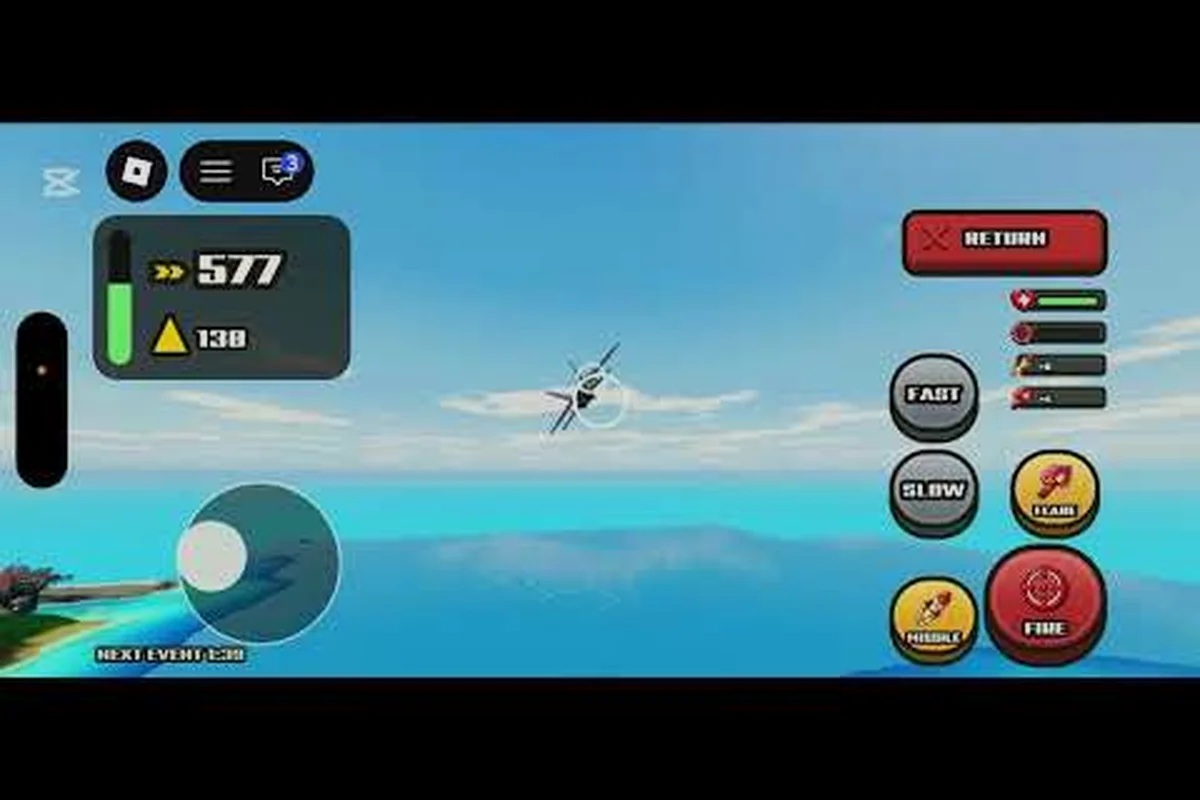
World of Nukes Viper missiles are the fastest free firepower you can add to your arsenal, and most new players never claim them. Five warheads land in your inventory for typing one code, which is the difference between watching your neighbors expand and actually contesting them.
The catch is that free missiles are only worth something if you know what they hit and when to fire. This breakdown covers the KABOOM redemption, how Vipers stack up against the rest of the missile roster, and the targeting habits that turn five warheads into five real gains.
Players can verify these Viper missile mechanics and stats directly on the official World of Nukes Roblox page, which serves as the primary reference for the game's current systems.
Why Viper Missiles Matter in Your Early Arsenal
Missiles are the core ranged weapon in World of Nukes: you place a launcher, choose a target, and fire, with travel time, range, and damage-on-impact being the numbers players actually track. Official stat sheets are not published, so community footage remains the practical reference point for how each warhead behaves. That makes any free missile genuinely valuable, because you get to test the system without spending Cash you have not earned yet.
| Reward / Mechanic | Verified Value | Source | Practical Impact |
|---|---|---|---|
| KABOOM Cash grant | 100K Cash | KodeGG codes video + web portal | Covers early building costs before economy scales |
| KABOOM missile grant | 5 Viper Missiles | KodeGG codes video + web portal (cross-checked) | Strike option before a full launcher setup is affordable |
| Code status | Only verified code as of October 31, 2026 | Official group + KodeGG | No competing codes to split redemption attempts |
| Case sensitivity | Case-sensitive (KABOOM in capitals) | Official group reward context | One lowercase letter returns invalid-code error |
| Menu unlock condition | Codes menu locked until tutorial finished | Official group reward context | New accounts cannot redeem on spawn |
| Redemption limit | One per account | Standard Roblox code behavior | Missiles land in inventory automatically, no mailbox step |
The KABOOM code is the only verified redeem code as of October 31, 2026, and it grants 100K Cash alongside 5 Viper Missiles. That combination matters more than it looks. The Cash covers early building costs while the missiles give you a strike option before your economy can support a full launcher setup. Community trackers have cross-checked the code through the KodeGG codes video and its web portal, and one third-party tracker listed the same code name with slightly different reward text, so treat the missile count as the reliable part.
A few practical notes before you redeem: the codes field in World of Nukes accepts one entry at a time, so paste KABOOM in full rather than retyping it, since a single lowercase letter will return an invalid-code error and burn a redemption attempt. Because the 5 Viper Missiles land directly in your missile inventory, check the launcher panel before you fire — you want to confirm the count registered before spending one on a test strike at a distant island.
-
Codes are case-sensitive, so type KABOOM in capitals exactly as shown.
-
The codes menu stays locked until you finish the tutorial, so new accounts cannot redeem on spawn.
-
Rewards land in your inventory automatically, with no mailbox step.
-
One redemption per account is the standard behavior for Roblox codes of this type.
If you are still mapping out your first island, the island layout guide explains where a launcher actually fits without boxing in your economy. Placement matters because a launcher eats build space you would otherwise spend on Cash-generating structures, and the 5 Viper Missiles from KABOOM are wasted if you have nowhere to mount them — or if your first launcher sits so close to your spawn that a test strike reveals nothing about travel time across open water. The layout guide walks through spacing a launcher near your island edge instead, so the free missiles double as a real range test rather than a throwaway shot.
Redeeming the Code Step by Step
The redemption flow is short but easy to fumble. Finish the tutorial first, then open the codes menu from the in-game interface, paste or type KABOOM, and confirm. Your Cash balance updates immediately, and the five missiles appear as a usable item rather than a passive unlock.
If the code appears rejected, check three things in order: whether the tutorial is complete, whether your spelling matches exactly, and whether you have already redeemed on that account. Players report that a partially completed tutorial is the most common cause of a silent failure, since the menu can appear accessible while the backend still blocks redemption. Once it goes through, the missiles are yours permanently and do not expire.
Comparing Viper Missiles to Other Missile Types
Understanding World of Nukes missile types is what separates a player who fires randomly from one who fires with intent. Vipers sit in a practical middle ground: they are not the heaviest warhead in the game, but they are forgiving enough to use while you are still learning target priority. The table below reflects how players describe the practical differences in community footage rather than datamined numbers.
| Warhead | Practical Role | Typical Use Case | Cost to Obtain |
|---|---|---|---|
| Viper Missile | Reliable general-purpose strike | Early aggression, testing defenses | Free via KABOOM code |
| Standard missile | Baseline ranged damage | Routine harassment, chip damage | Cash purchase |
| Heavy warhead | Structure-focused damage | Breaking hardened targets | Higher Cash cost |
| Nuke-class payload | Maximum area impact | Late-game deterrence and resets | Long unlock chain |
The takeaway is not that Vipers beat everything. It is that Vipers cost you nothing, which changes the risk math entirely. Spending a purchased warhead on a speculative target feels bad; spending a free one to test whether a neighbor's defense has a gap feels like research. That psychological difference is why so many players keep Vipers in reserve for probing runs rather than saving them for a big finish.
When a Viper Is the Wrong Choice
Vipers underperform when the target is heavily reinforced or when you need a single decisive hit. If a rival has stacked defenses around their launcher cluster, a Viper will likely trade badly and reveal your intent without removing the threat. In those spots, save the free warheads and work toward heavier options instead.
The missile upgrade path covers how unlocking better warheads changes your options, and it is worth reading before you burn your free stock on a target that will simply rebuild. The reason is timing: free Viper stock regenerates slowly, and each warhead you spend on a reinforced launcher cluster is one you cannot redirect toward a softer target later in the same session. Check the upgrade tree first so you know whether your next unlock is a heavier warhead that actually cracks stacked defenses, then hold your Vipers until a high-value, lightly defended target appears. Spending them early on a target that rebuilds leaves you with nothing when a genuine opening shows up.
How to Pick Your Targets Before You Fire
Knowing how to pick your targets is the single biggest skill gap in World of Nukes combat. A missile that hits an empty corner accomplishes nothing except telling your opponent you are watching them. A missile that hits a launcher, a resource cluster, or an exposed production building sets them back by minutes of rebuild time.
Prioritize targets in roughly this order, weighing each against the warhead cost of a Viper missile: active launchers first, since each one you remove cuts the incoming pressure on your island immediately, then production clusters where income is generated, then exposed storage sitting outside defensive coverage, then bridge and path chokepoints where slowing movement matters more in the mid-game than raw damage. Empty ground never earns a warhead, no matter how satisfying the explosion looks — a strike on bare terrain only reveals that you are watching without costing your opponent anything.
-
Active launchers — removing one reduces incoming pressure on your island immediately.
-
Production clusters — hitting where income is generated hurts more than hitting decoration.
-
Exposed storage — if resources sit outside defensive coverage, they are fair game.
-
Bridge and path chokepoints — slowing movement matters in the mid-game more than raw damage.
-
Empty ground — never worth a warhead, no matter how satisfying the explosion looks.
Range and travel time also shape target choice. Because missiles take time to arrive, a moving or rebuilding opponent can partially dodge the impact, so aim at structures that stay put. Community footage suggests impact damage is the practical metric players watch, and structures do not relocate mid-flight.
Scouting the Base Before Your Missiles Fly
Spend thirty seconds scanning a rival island before launching. Look for launchers without overlapping coverage, buildings placed near the shoreline, and any cluster where one impact would touch two valuable structures. Those are the spots where a single Viper produces double value.
The weapons overview breaks down how launchers, jets, and warships interact, which helps you judge whether a missile is even the right tool for the target you have spotted. That matters most for the Viper: it is a fast, short-range strike option, so it rewards hitting soft or exposed structures rather than dug-in emplacements that a heavier warhead or an airstrike handles better. Cross-check the target against your available delivery platforms before spending the missile — if a jet can reach the same cluster with more payload, save the Viper for a closer, time-sensitive hit instead.
How to Launch Strikes Without Wasting Warheads
Learning how to launch strikes cleanly is mostly about sequencing. Firing all five Vipers in a burst feels powerful and usually wastes three of them, because the first hit alerts the defender and the rest land on a base that is already reacting. Staggered fire produces better results.
| Strike Pattern | Warheads Used | Best Situation | Risk |
|---|---|---|---|
| Single probe | 1 | Testing defenses for gaps | Low, but limited damage |
| Double tap | 2 | Confirming a weak point | Moderate exposure |
| Staggered pressure | 3 over time | Forcing constant rebuilds | Opponent adapts |
| Full salvo | 5 at once | Finishing an already damaged base | High waste potential |
The staggered pressure pattern is the one most experienced players default to with free warheads. Fire one, watch what the defender repairs first, then hit the repair site. That tells you what they value, and their repair priority is essentially a map of their economy.
Timing Your Attacks Around Activity
World of Nukes is a live multiplayer game, so who is online matters as much as what you hit. Strikes against an idle player land on a static base and produce clean damage. Strikes against an active player invite immediate retaliation, and if your own defenses are thin, that trade goes badly.
A practical rule: probe with one Viper when you are unsure, and hold the remaining four until you have confirmed either a defensive gap or an offline opponent. The air strikes and naval strikes breakdown explains how missile timing interacts with other delivery systems if you plan to combine pressure from multiple angles.
Building a Strike Plan Around Five Free Warheads
Five missiles is not a large stockpile, so treat them as a budget rather than a barrage. A workable plan spends them across three phases: one probe early to learn how your nearest rival defends, two in the mid-game against confirmed weak points, and two held in reserve for either a finishing strike or a deterrent response.
That reserve matters psychologically. A player who knows you still have warheads behaves differently than one who watched you empty your stock. Even without firing, holding two Vipers changes how aggressively a neighbor expands toward your side of the map.
Pair the missiles with economic growth so the free warheads are not carrying your entire offense. The nuke launch guide walks through the longer unlock chain toward heavier payloads, which is where your offense should eventually live once the Vipers are spent.
Frequently Asked Questions
What do World of Nukes Viper missiles actually do?
They are a general-purpose missile warhead you fire from a launcher at a chosen target, dealing impact damage on arrival. Five of them arrive free through the KABOOM code along with 100K Cash, making them the cheapest way to test the strike system before investing in purchased warheads.
Is the KABOOM code still working?
As of October 31, 2026, it is the only verified redeem code, granting 100K Cash and 5 Viper Missiles. Community trackers have cross-checked it through the KodeGG codes video and web portal. Codes are case-sensitive, and the codes menu unlocks only after you complete the tutorial.
How should I pick targets for my first strike?
Aim at active launchers, production clusters, or exposed storage rather than empty ground. Scan for structures without overlapping defensive coverage, since those take full damage. Firing one missile first and watching what the defender repairs reveals what they value most.
Can I save Viper missiles for later?
Yes. They do not expire, and holding two or three in reserve changes how aggressively neighbors behave toward you. Staggering fire across a session generally produces more total value than emptying all five in a single burst against one base.
Do Viper missiles replace heavier warheads?
No. They are a reliable, free entry point into the missile system, but heavily reinforced targets need heavier payloads. Viper impact damage scales poorly against layered defenses, so a single Viper on a bunkered silo often just strips shields and telegraphs your intent. Use Vipers for probing and pressure — one missile to test repair behavior, a second to punish exposed launchers — then work toward upgraded warheads for decisive hits on hardened bases.
Five free Viper missiles will not win a server on their own, but they remove the cost barrier that keeps new players from ever learning how strikes work. Redeem KABOOM, probe with one, spend the rest on targets you have actually scouted, and keep a couple in reserve so your neighbors keep guessing.