
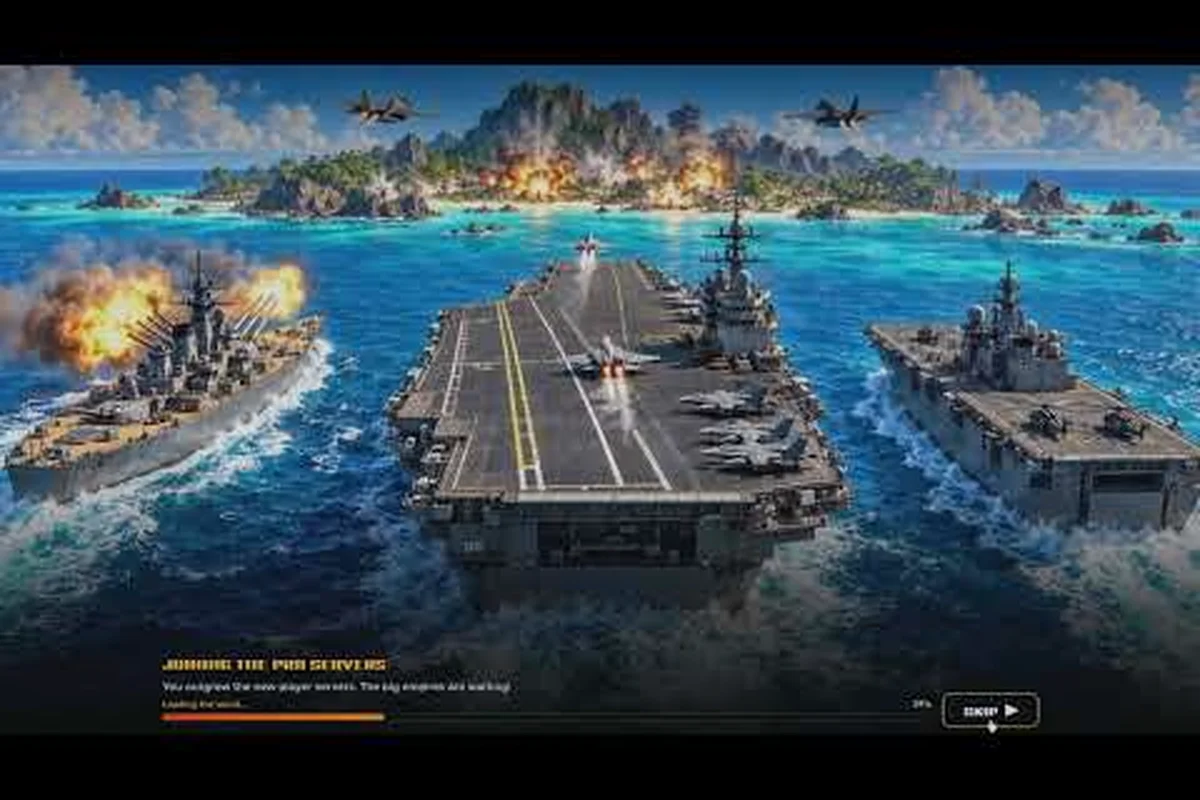
World of Nukes missile upgrades are the single biggest lever on how hard your strikes land, and most players pour cash into new launchers before they understand what each tier actually changes. This guide breaks down the unlock chain, the range and damage tradeoffs, and how to spend so every upgrade out-hits the last.
For a full breakdown of missile tiers, upgrade costs, and launch mechanics, see the official World of Nukes game page.
Why Missile Upgrades Decide Your Damage Curve
Every missile in World of Nukes follows the same basic loop: you place a launcher, pick a target, and fire. The official game page keeps the numbers vague, so the practical data points players track are travel time, range, and damage on impact. Those three stats are exactly what upgrades move, and they move them unevenly.
That unevenness is the whole reason a missile upgrade plan matters. A tier that adds range but barely touches damage will let you reach a rival's island without actually hurting it, while a damage tier on a short-range launcher can leave you unable to get close enough to use it. Community footage captured on 2026-10-31 shows the same pattern repeatedly: players who upgrade blindly end up with launchers that look strong on paper and underperform in a real fight.
The fix is to treat missile upgrades as a combat guide problem, not a shopping problem. Before you buy anything, decide what job the launcher has — long-range harassment, close-in finishing, or area denial — and only then pick the tier that supports it. That single habit separates players who waste cash from players whose first strike usually lands.
It also connects directly to your economy. Missile tiers are expensive, and the endgame economy guide explains how to build the cash engine that funds them without stalling your island. Upgrades you cannot afford to repeat are upgrades you should not buy yet.
The Missile Unlock Chain, Step by Step
Unlocking stronger weapons is not a single purchase — it is a chain, and each link gates the next. Based on community testing and reported progression, the chain looks roughly like this: the tutorial clears the basic launcher and fire flow, your first launcher placement opens that building's upgrade menu, a steady income threshold makes tier two realistic, and higher-tier weapons sit behind the wonder chain rather than raw cash alone. Because each step depends on the one before it, skipping ahead — hoarding cash for a tier-three missile before finishing the wonder chain — stalls your missile upgrades outright.
-
Tutorial completion — clears the basic launcher and the fire flow.
-
First launcher placement — unlocks the upgrade menu for that building.
-
Income threshold — you need a steady cash flow before tier two is realistic.
-
Wonder progression — higher-tier weapons sit behind the wonder chain, not behind raw cash alone.
-
Warhead selection — once unlocked, you choose a warhead before each launch.
That last point trips up a lot of players. Unlocking a missile tier does not mean every launch uses it; you still pick the warhead at fire time, and picking wrong wastes the upgrade entirely. The weapons guide walks through the launch flow in detail if you are still fumbling the fire sequence.
Reading the Upgrade Menu Correctly
The upgrade menu shows you the next tier's effect, not a full stat sheet. Read it as a delta — what changes from your current missile — rather than as an absolute number. If the delta is mostly range, ask whether you actually need reach or whether you need punch. Players who misread this end up buying reach they never use.
Comparing Missile Tiers and What Each One Buys
The table below ranks missile upgrade tiers by practical value in real matches, weighing each tier against the fire flow you actually run: a base launcher keeps you learning the launch sequence, the range tier only pays off when rivals sit across water, while the damage tier converts every clean lock into a finisher on wounded targets. Exact figures are not published officially, so treat the ratings as community-reported rather than datamined — the ordering reflects how often each upgrade swings a fight, not raw stat sheets.
| Tier | Primary Gain | Best Use Case | Value Rating |
|---|---|---|---|
| Base launcher | Short range, low impact | Learning the fire flow | Low |
| Range tier | Longer travel reach | Hitting rivals across water | Medium |
| Damage tier | Higher impact damage | Finishing wounded targets | High |
| Balanced tier | Modest gains to both | General-purpose strikes | High |
| Top tier | Best range and impact | Late-game pressure | Very High |
The pattern is clear: balanced and damage tiers carry the most value, because range alone rarely wins a fight. A missile that reaches the target but cannot break it just announces your intentions. Consider a wounded rival retreating toward a shoreline: a range-tier missile closes the gap but lands with low impact, letting them slip away with a sliver of health, whereas a damage-tier or balanced-tier warhead converts that same clean lock into a confirmed finisher. This is why the value ratings above climb from Low at the base launcher to High at the damage and balanced tiers — the extra travel reach of the range tier only pays off in the narrow cross-water scenario, while impact gains swing every engagement you actually take.
Range Versus Damage: The Real Tradeoff
Range is a convenience stat; damage is a winning stat. Long range lets you open a fight from safety, but if the impact is weak, the defender repairs faster than you can re-fire. Damage tiers shorten fights, which matters more in a game where every exchange costs cash.
That is why the strike guide treats target selection as more important than raw tier. A mid-tier missile aimed at the right building beats a top-tier missile aimed at a wall every time.
Building a Weapons Tier List Around Your Playstyle
A weapons tier list is only useful if it matches how you actually play, because world of nukes missile upgrades reward commitment to a single upgrade path far more than scattered spending. Three broad playstyles dominate, and each wants a different upgrade priority: raiders stack damage tiers to convert every missile into destroyed enemy value, builders lean on range tiers to harass from behind their own defenses, and balanced commanders split between offense and defense. Buying upgrades that fight your playstyle is the most common cash sink in world of nukes, so decide your identity before you spend a single credit.
| Playstyle | Priority Upgrade | Why It Fits |
|---|---|---|
| Aggressive raider | Damage tier | Ends fights fast, less repair time for the enemy |
| Patient builder | Range tier | Harass from safety while your island grows |
| Balanced commander | Balanced tier | Flexible across offense and defense |
If you raid constantly, damage tiers pay for themselves because each strike converts into destroyed enemy value. If you prefer to build and defend, range lets you punish intruders without exposing your own launchers. Neither is wrong — but buying the wrong one for your style is the most common cash sink in the game.
When to Skip a Tier Entirely
Some tiers are not worth the cash at your stage. If you are still expanding your island and cannot yet sustain repeated launches, a top-tier missile is dead weight — you will fire it once and then be broke. Skip ahead only when your income can absorb a replacement launch without hurting your build order.
Practical Combat Tips for Fighting Enemies
Knowing the tiers is half the job; using them is the other half. The gap between a tier list and a won fight comes down to timing and target selection: a tier-3 missile fired at a lone scout wastes its damage-per-cost advantage, while saving it for a clustered armor column or an enemy launcher cluster multiplies its value. Watch how upgraded launchers telegraph reload windows, and stagger your launches so a high-tier warhead lands while the enemy is still repositioning from your first strike.
-
Scout before you fire. Confirm the target is worth the warhead, not just visible.
-
Fire in sequence, not in panic. Two well-aimed mid-tier missiles beat four scattered ones.
-
Protect your launchers. An upgraded launcher is a bigger loss than a basic one.
-
Pair missiles with other systems. Air and naval strikes cover what missiles cannot reach.
-
Track your spend. Every launch has a replacement cost; budget for it.
The last tip matters more than it sounds. Players who treat missiles as free eventually run out of cash mid-fight and lose the exchange they were winning. If you want the full picture of how missiles, jets, and warships fit together, the nuke launch guide covers the wider strike picture.
Coordinating Missiles With Air and Sea
Missiles are your ranged backbone, but they are slow to reposition. Jets and warships fill the gaps — jets for fast response, warships for sustained pressure. A combat guide that ignores this is incomplete, because the strongest players never rely on one system alone.
Spending Cash So Each Upgrade Out-Hits the Last
The final piece is sequencing, and it is where most players bleed cash without noticing. A damage tier bought before your income stabilizes forces you to skip firing windows, because a missile you cannot afford to reload is dead weight during a fight; conversely, banking for the top tier too early stalls island expansion and leaves you out-scaled. Treat each purchase as an opportunity cost against the balanced tier, which delivers the best value per cash unit, then layer damage to convert fights into wins and add range last since it is convenience rather than power. Buying in this order means every missile you own can be fired twice before you commit.
| Spending Step | Action | Reason |
|---|---|---|
| 1 | Stabilize income first | Upgrades need repeat funding |
| 2 | Buy the balanced tier | Best value per cash unit |
| 3 | Add damage tier | Converts fights into wins |
| 4 | Add range tier last | Convenience, not power |
| 5 | Save for top tier | Only when income supports it |
Following this order means you never buy a missile you cannot afford to fire twice. It also keeps your island growing while your arsenal improves, which is the actual goal. Concretely, a player who grabs a damage tier before their income stabilizes often wins the opening exchange but then sits out the next firing window with an empty launcher, handing tempo back to the enemy; the balanced tier avoids that trap because it clears the reload cost with room to spare. Saving for the top tier only once income supports it, per step 5 of the table, keeps your island expansion funded so you are not out-scaled while banking.
Reading Community Reports With Caution
Community footage is the best available reference for missile behavior, but it is not official data. Treat reported numbers as directional, verify against your own launches, and adjust. The official Roblox page for World of Nukes confirms missiles are the core ranged weapon and that launchers are placed and fired manually, but it does not publish stat tables — so player testing remains the practical source.
Frequently Asked Questions
How do World of Nukes missile upgrades actually work?
Each launcher has its own upgrade path, and buying the next tier improves range, damage on impact, or both. You still choose a warhead at fire time, so the upgrade only pays off if you pick the matching warhead for the job.
What is the fastest way to unlock stronger weapons?
Clear the tutorial, place your first launcher, and build steady income before chasing higher tiers. Most stronger weapons sit behind the wonder chain rather than raw cash, so progression unlocks matter as much as saving up. In practice this means your early cash is better spent on the balanced tier and a second launcher than on hoarding for a top-tier warhead you cannot yet afford to fire repeatedly — a single high-tier strike can drain a thin economy, leaving you unable to replace a lost launcher. Treat the wonder chain as your real unlock gate: each wonder you finish widens the weapon pool, so route income toward completing it while keeping a reserve for replacement costs.
Which missile tier is best for beginners?
The balanced tier is the safest first buy because it improves both range and impact without specializing, so a single launcher stays useful against early targets instead of forcing a second purchase. Beginners who buy pure range often find their strikes too weak to finish a fight, which wastes cash early and delays the wonder chain that actually gates stronger warheads. Pair the balanced tier with a matching warhead at fire time, and hold the range-only line until your income can fund a second launcher.
Do missile upgrades carry over between launchers?
Upgrades are tied to the individual launcher you improve, so a new launcher starts fresh — nothing transfers over, and there is no shared tech tree to fall back on. That is why protecting upgraded launchers matters: losing one costs you the tier investment, not just the building. Treat every upgraded launcher as a sunk cost you must defend, and keep replacement cash in reserve before you push a strike, since a rebuilt launcher returns at base tier and must be re-upgraded from scratch.
How should I fight enemies with missiles?
Scout the target first, confirm it justifies the warhead cost, then fire in a tight sequence instead of scattering shots across the map. Pair your launcher with jets or warships so one platform covers the other's reload gap, and always budget the replacement cost before committing — since a destroyed launcher rebuilds at base tier, an unplanned strike can cost you both the warhead and the upgrade investment behind it.
Missile upgrades in World of Nukes reward planning over impulse. Stabilize income, buy the balanced tier first, add damage before range, and only chase top-tier warheads once your cash engine can absorb repeated launches. Do that, and every upgrade you buy will genuinely out-hit the one before it.