
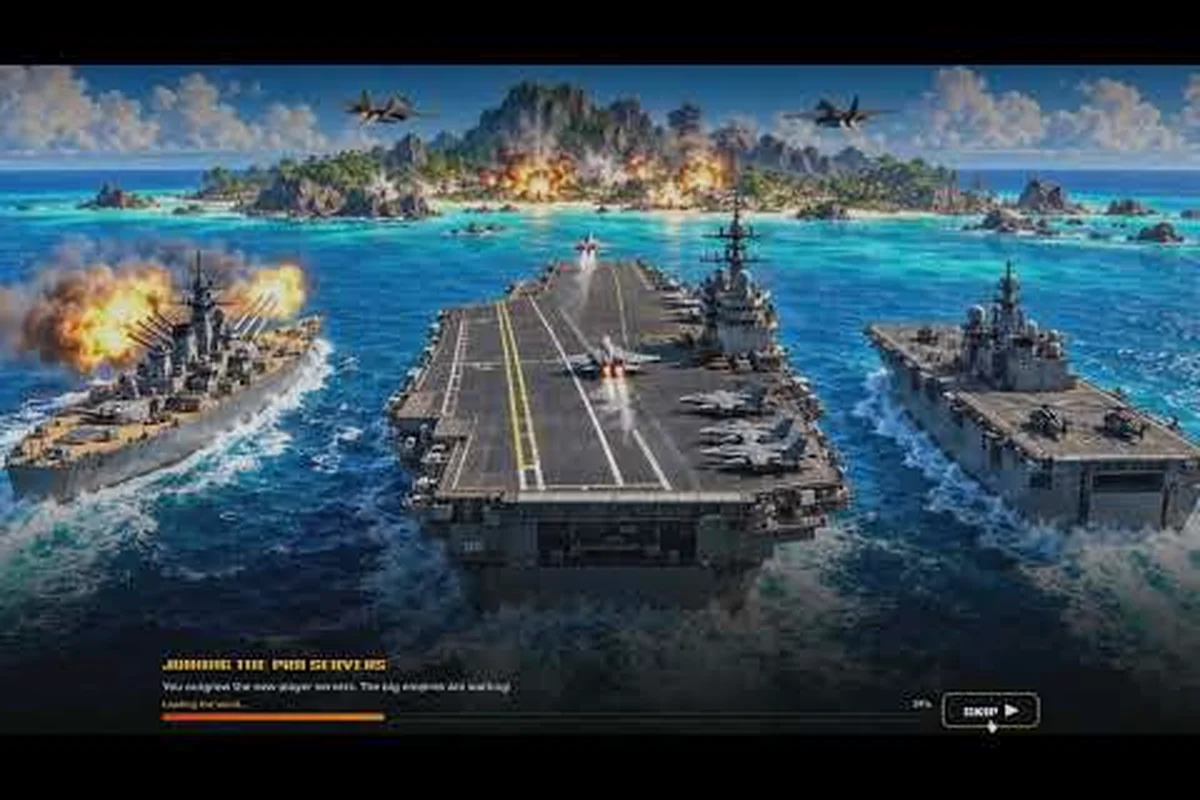
The World of Nukes new weapons update reshaped how missile launchers, jets, and warships fit into a strike plan, and the changes matter the moment you queue your next launch. This breakdown covers what shifted in the arsenal and how to adjust your attack runs.
The official Roblox page confirms the game launched on September 28, 2026 and was still being patched as recently as October 30, 2026, which means the weapon lineup you learned in week one is not the one you are firing today. Understanding those shifts is the difference between wasting warheads and landing hits that actually convert.
For the most current details on weapon stats, update notes, and other in-game mechanics, players can check the official World of Nukes Roblox page, which serves as the primary source for the latest information on new weapons.
What the World of Nukes New Weapons Update Changed
The headline of this patch is not a single new toy but a rebalance of how existing weapons behave in practice. Community footage captured on October 31, 2026 shows missile launchers still functioning as the core ranged weapon: you place a launcher, pick a target, and fire. What changed is the practical feel of that loop, with travel time, range, and damage-on-impact all worth re-measuring.
Because the developer does not publish official stat sheets, the most reliable picture comes from player testing and recorded footage rather than a clean changelog. That is a recurring theme across the entire World of Nukes update history, where the community effectively builds the patch notes by observation.
Here is how the main weapon systems stack up after the shift, and the differences matter more than the raw numbers suggest. The Missile Launcher stays your dependable mid-range baseline, but its slower travel time means you now lead moving targets instead of firing point-blank. Jets trade volume for strike timing, rewarding a deliberate approach against distant or defended targets rather than constant harassment. Warships shift toward positioning, since naval bombardment now depends on where you park the hull for coastal pressure and area denial. Warheads are the finisher: damage-on-impact tuning makes payload choice decisive when a weakened target is one hit from collapse, so save the heavy warhead rather than opening with it.
| Weapon System | Role After Update | What Changed Most | Best Use Case |
|---|---|---|---|
| Missile Launcher | Core ranged damage | Travel time and impact feel | Reliable mid-range strikes |
| Jets | Fast aerial strikes | Strike timing and approach | Hitting distant or defended targets |
| Warships | Naval bombardment | Positioning importance | Coastal pressure and area denial |
| Warheads | Payload choice | Damage-on-impact tuning | Finishing a weakened target |
The practical takeaway is that missiles remain your dependable baseline while jets and warships reward more deliberate setup. If you have been treating all three as interchangeable, the new balance makes that assumption expensive: a missile launcher still wins most mid-range exchanges because you can fire and reposition immediately, whereas a jet sortie that arrives late against a target already softened by naval bombardment wastes its strike window. Build your opening around launcher volume, then commit jets only once a defended target is isolated — and hold the heavy warhead until the damage-on-impact tuning guarantees the finisher connects.
Why the Missile Launcher Still Anchors Your Arsenal
Missiles are the weapon most players unlock and understand first, and the update kept them central rather than pushing them aside. The launcher flow is unchanged in structure, but the numbers players track — how long a missile takes to arrive, how far it reaches, and how much it removes on impact — are the data points worth re-testing in a live match.
Players report that the launcher's value comes from predictability rather than raw power. You can plan around a missile in a way you cannot always plan around a jet sortie, because the launcher stays put and the strike lands where you aimed it. That consistency is why the World of Nukes new weapons update did not dethrone it.
The catch is that predictability cuts both ways. An opponent who has watched your launcher placement can pre-empt it, so rotating firing positions between strikes matters more now than it did in the launch build. Treating one launcher as a permanent fixture is the fastest way to see your missiles intercepted or dodged.
How Jets Fit Into the New Strike Mix
Jets occupy a different niche: speed and reach in exchange for a more involved setup. The update nudged the aerial role toward timing-sensitive strikes, meaning the approach matters as much as the payload. A jet run that arrives late or off-angle wastes the same warhead a missile would have delivered cleanly.
Community footage suggests jets shine when a target sits beyond comfortable launcher range or behind defenses that punish a slow, obvious missile path. The trade-off is that you commit more attention to a jet sortie, so it is a poor choice when you are simultaneously managing income and defense on your own island.
The smart pattern is to use missiles for the routine work and save jets for the strikes that genuinely need the extra reach. That division keeps your attention where it belongs instead of splitting it across every launch. In practice this means queueing missile volleys against soft, static targets — undefended silos, exposed production buildings, isolated expansion outposts — while reserving a jet sortie for hardened targets sitting behind layered defenses or positioned outside comfortable launcher range. The payoff shows up in your attention budget: a missile launch is fire-and-forget, so you can keep cycling income and island defense, whereas a jet run demands active angle and timing management from launch to impact. Treat jets as a scalpel for the handful of strikes per match that a missile genuinely cannot reach, and let the missile line absorb the rest.
Where the Patch Notes Actually Live
There is no clean, developer-published patch document to read, so the World of Nukes update notes effectively live in the community. The official event page that once advertised the late-October window had already disappeared by October 31, leaving trackers and player reports to reconstruct what actually shipped.
That does not mean the information is unreliable — it means you have to cross-check. When three separate community sources agree that a missile feels slower or a jet strike lands harder, that consensus is worth acting on. When a single post claims a dramatic change, treat it as a rumor until footage backs it up.
The World of Nukes new update breakdown is a useful companion here, since it tracks the broader patch context that the weapon tweaks sit inside. Weapons rarely change in isolation; they shift because the economy, defense, or event pacing around them moved too.
| Signal Type | Reliability | How to Use It |
|---|---|---|
| Recorded gameplay footage | High | Confirm travel time and impact feel |
| Multiple agreeing player reports | Medium-high | Cross-check a suspected change |
| Single forum or chat claim | Low | Wait for corroboration |
| Official page timestamps | High | Confirm patch dates only |
Separating Confirmed Changes From Community Noise
The confirmed facts are narrow but solid: the game was updated on October 30, 2026, and a developer-titled live event ran in the same window. Everything beyond that — exact damage numbers, precise range values — comes from testing rather than documentation.
That gap is exactly why the World of Nukes all updates picture is so patchy. Each patch adds a layer of community knowledge that never gets written down officially, and players who join later inherit assumptions without the evidence behind them. Rebuilding that evidence yourself, even roughly, keeps your strike planning honest.
A simple habit helps: after any patch, fire one missile and one jet strike at a known target and note what happens. Two minutes of testing beats an hour of reading conflicting claims. Pick a fixed reference point — a flat test range tile or an undefended outpost — and log the resulting damage number, blast radius, and any change to the missile's flight path or the jet's release altitude. Repeat the same two strikes after each new weapons update and compare against your previous entry; a shift of even one tile in splash radius or a few points of damage is the kind of delta that community threads rarely agree on. Keeping this running log turns the patchy World of Nukes all updates history into your own verified baseline, so later claims about a buffed warhead or nerfed strike jet can be checked against evidence you gathered yourself.
How the Weapons Shift Reshapes Your Attack Runs
The most immediate consequence of the World of Nukes new weapons update is that old attack routines need a refresh. A strike sequence that worked in the launch build may now waste a warhead because the timing assumptions underneath it changed.
Start by re-establishing your baseline. Fire a missile at a target you know well and time the arrival. Then run a jet strike on a comparable target and compare the effort-to-payoff ratio. That comparison tells you which weapon deserves the bulk of your warheads in the current build.
From there, rebuild your strike plan around three questions: which targets sit inside reliable missile launcher range versus those that need a jet's extra reach, how many warheads you can burn per session before your economy stalls, and which strikes actually convert into map progress instead of spectacle. Treat the answer as a budget, not a wishlist — the World of Nukes new weapons update rewards players who spend warheads where the effort-to-payoff ratio is proven, and punishes those who keep firing at targets their current loadout can no longer crack efficiently.
-
Which targets sit within reliable launcher range, and which need a jet?
-
How many warheads can you afford to spend per session without stalling your economy?
-
Which strikes actually convert into progress rather than just spectacle?
The World of Nukes strike guide digs into matching each weapon to the right target, which becomes more valuable as the systems diverge. The update made the differences between missiles, jets, and warships matter more, not less.
| Attack Scenario | Recommended Weapon | Reason |
|---|---|---|
| Close, undefended target | Missile launcher | Cheap, predictable, fast enough |
| Distant or screened target | Jet | Extra reach and angle flexibility |
| Coastal pressure | Warship | Sustained naval presence |
| Finishing a weakened rival | Any warhead | Payload matters more than platform |
Timing a Strike So It Actually Lands
Timing is the quiet variable that the update made louder. A missile that arrives after a target has already relocated is a wasted warhead, and a jet strike that telegraphs its approach invites a response. The fix is to strike when the target is committed elsewhere — mid-expansion, mid-defense-build, or distracted by their own attack run.
Players who land consistent hits tend to fire in clusters rather than one-offs. A single missile is easy to absorb; a coordinated sequence that forces a reaction is much harder to shrug off. The update did not change that principle, but it did raise the cost of getting it wrong.
Comparing the World of Nukes Latest Version to the Launch Build
The World of Nukes latest version is meaningfully different from what shipped on September 28, 2026, even though the core loop — build income, defend the island, unlock nukes, strike rivals — remains intact. The weapon layer is where the feel changed most.
At launch, the arsenal was simpler and the differences between platforms were easier to ignore. After the October patches, each weapon system has a clearer identity, which rewards players who specialize and punishes those who spread warheads evenly across every option.
| Aspect | Launch Build | Current Version |
|---|---|---|
| Weapon differentiation | Modest | Pronounced |
| Missile role | Primary damage | Reliable baseline |
| Jet role | Situational | Timing-sensitive reach |
| Warship role | Support | Positional pressure |
| Documentation | Sparse | Community-reconstructed |
That progression mirrors the broader World of Nukes update history, where each patch sharpens the game's identity rather than reinventing it. The weapons update is a refinement pass, not an overhaul, and treating it that way keeps your expectations calibrated.
What This Means for Your Warhead Budget
Because weapons now behave differently, your warhead budget should shift with them. If jets demand more setup for the same payoff, spending half your warheads on jet sorties is a worse deal than it was before. Reallocating toward reliable missile strikes frees warheads for the moments that genuinely need reach.
The World of Nukes game news hub tracks how these balance shifts develop over time, which helps you spot the pattern before it costs you a session. Balance changes tend to arrive in clusters around live events, so timing your experimentation to those windows is efficient.
Adjusting Your Play to the Current Build
Adapting to the World of Nukes new weapons update is less about mastering new buttons and more about updating old habits. The systems are familiar; the assumptions underneath them are not. A launcher that felt instant on the launch build now needs its travel time re-measured in a live match, and jets that once flew casually are now better held back for targets sitting beyond missile comfort range. Players who treat the update list as a checklist of new toys miss the point — the patch quietly rewrote the economics of every launch, so the real skill is auditing your routine against the current build before stale timing costs you a warhead.
The order matters because the update list interlinks these systems: a re-timed launcher changes which targets fall inside missile comfort range, which in turn dictates where jets are worth committing and how firing positions should rotate. Work through the audit as a sequence rather than a checklist — measure launcher travel time first, then re-baseline jet reach against that new figure, then adjust strike clustering and warhead spend tracking to match. Skipping ahead, such as clustering strikes before confirming launcher timing, reintroduces the same stale assumptions the patch was meant to correct.
-
Re-test your launcher in a live match and note travel time before trusting old timing.
-
Reserve jets for targets that genuinely sit beyond missile comfort range.
-
Rotate firing positions so opponents cannot pre-empt a fixed launcher.
-
Cluster strikes into sequences rather than isolated single launches.
-
Track your warhead spend against actual progress to catch waste early.
Each of these is small on its own, but together they close the gap between players who adapted to the patch and players still firing on launch-build assumptions. The compounding effect is easiest to see in warhead economy: a player who re-times the launcher, holds jets for beyond-comfort-range targets, rotates firing positions, and clusters strikes will typically waste fewer launches per confirmed hit than one who changes only a single habit, because a stale launcher timing inflates every downstream decision — jet commits, cluster spacing, and spend tracking all inherit the error. Treat the five adjustments as one linked system rather than five independent tweaks, and audit them in the order the update list interlinks them so a corrected launcher figure propagates cleanly through jet reach and strike clustering instead of being overwritten by an old assumption two steps later.
| Habit | Old Approach | Updated Approach |
|---|---|---|
| Launcher placement | One fixed spot | Rotate between positions |
| Jet usage | Frequent, casual | Reserved for reach |
| Strike pattern | Single launches | Clustered sequences |
| Warhead tracking | Loose | Measured per session |
The players who climb fastest after a weapons patch are rarely the ones with the biggest arsenal — they are the ones who noticed the shift early and adjusted their routine before it cost them anything. The reasoning is mechanical rather than motivational: in the world of nukes new weapons update, a player still firing on launch-build launcher timing wastes roughly one warhead per misjudged shot, and that loss compounds across a session because every wasted launch also skews the jet-reach and cluster-spacing decisions built on top of it. A player who spends the first live match after the patch simply logging launcher travel time — rather than immediately buying into the new content — enters the rest of the update list with a corrected baseline, so their warhead spend tracking reflects real progress instead of inflated launch counts.
Frequently Asked Questions
What did the World of Nukes new weapons update actually change?
The update rebalanced how missile launchers, jets, and warships perform in practice rather than adding a single headline weapon. Missiles stayed as the reliable baseline, while jets became more timing-sensitive and warships leaned harder on positioning. Exact numbers are not officially published, so community testing and recorded footage remain the best reference.
Is there an official World of Nukes update list I can read?
No clean developer changelog exists. The official Roblox page confirms patch dates, but detailed weapon stats come from player testing. The World of Nukes update list is effectively community-built, which is why cross-checking multiple sources before acting on a claimed change is the safer approach.
Which weapon should I focus on after the patch?
Missile launchers remain the safest investment because they are predictable and cheap to use repeatedly. Jets are worth keeping for targets beyond launcher range, and warships suit coastal pressure. Spreading warheads evenly across all three is the least efficient option in the current build.
How do I know if a weapon change is real or just a rumor?
Fire one controlled test yourself. Launch a missile at a known target and time the arrival, then run a comparable jet strike. Two minutes of personal testing settles most disputes faster than reading conflicting community claims, and it keeps your strike planning grounded in evidence.
Does the update affect defense as much as offense?
Indirectly, yes. Because strike timing and weapon roles shifted, defensive setups that relied on predictable attack patterns may need review. The core defense mechanics did not change, but the attacks arriving at your island behave differently, so re-checking your coverage after any weapons patch is worthwhile.