
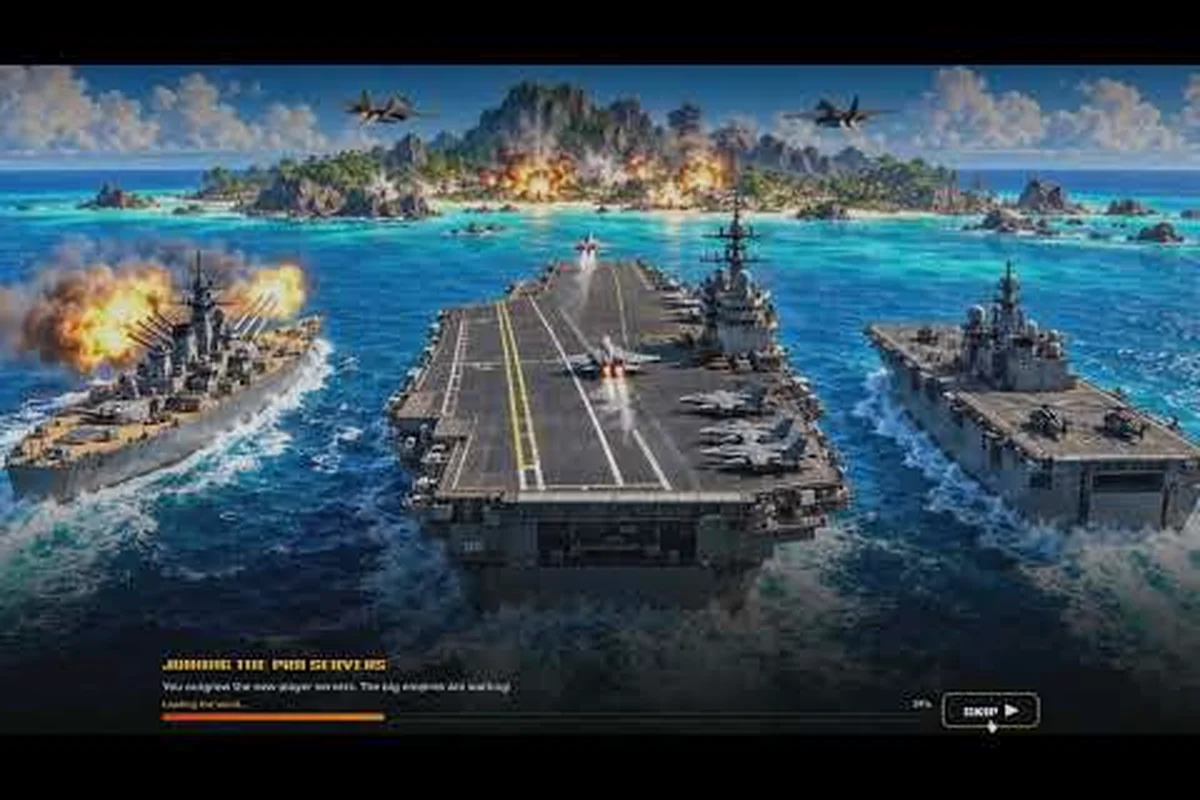
World of Nukes game news moves fast for a title that launched on September 28, 2026, and the October 30 patch already reshaped how the community reads each release. This tracker pulls the confirmed dates, the version history, and the roadmap signals into one place so you stop guessing what changed and start planning around it.
What the World of Nukes Game News Timeline Actually Shows
The official Roblox page is the anchor for every date cited below. According to the World of Nukes official Roblox page, the experience was created on September 28, 2026 and was updated as recently as October 30, 2026. Those two timestamps are the only hard, verifiable bookends the developer group has given players so far, and everything else in the community conversation is inference layered on top of them.
That gap matters because a five-week-old game with one confirmed patch generates more rumor than data. Players searching for the latest World of Nukes news often land on speculation threads that treat a single update as a full roadmap. The table below separates what is confirmed from what is still community-reported.
| Item | Status | Date | Source Type |
|---|---|---|---|
| Game created / launched | Confirmed | September 28, 2026 | Official Roblox page |
| Most recent update | Confirmed | October 30, 2026 | Official Roblox page |
| "UPDATE + LIVE EVENT" developer event | Confirmed title, timing community-reported | Around October 31, 2026 | Official event title + community tracker |
| Next major content drop | Unconfirmed | Unknown | Community speculation |
| Roadmap document | Not published | N/A | None |
The key takeaway is that no formal roadmap document exists yet: the roadmap row in the table above is marked "Not published," and the "Next major content drop" row remains "Unconfirmed" with no source type attached. Anyone presenting a dated content calendar — whether a "Phase 2" map rotation, a nuke-tier unlock schedule, or a seasonal event window — is extrapolating from the October 30 patch cadence rather than quoting the developer group. That distinction matters for readers tracking world of nukes update news, because a single confirmed patch at the five-week mark is a sample size of one, not a release rhythm you can project forward. Until the developer group posts an official roadmap or ships a second dated update, treat any version-number or content-drop claim as community-reported at best.
Why the Launch-to-Patch Gap Is the Real Story
A 32-day gap between creation and the first confirmed update is short, and that speed tells you something useful about the development rhythm. Small teams that patch within a month of launch are usually in a live-ops loop: ship, watch telemetry, patch, repeat. That pattern suggests future World of Nukes updates will arrive in smaller, more frequent bursts rather than one massive annual expansion.
Community trackers have already started modeling the cadence. The LootSheep event tracker logged a community-reported window for the late-October live event running from October 31, 2026 16:50Z to November 1, 2026 22:27Z, though the original event page had disappeared by October 31. That disappearance is worth flagging: when an official event page vanishes, treat the timing as player-reported until the developer group confirms it again.
The October 30 Patch, Analyzed in Depth
The October 30 patch is the single most important data point in the current World of Nukes version history, and it deserves a closer look than a one-line changelog. The official page confirms the update date but does not publish a full patch note list, which is exactly why community documentation fills the gap.
Here is how the October 30 release fits into the broader update picture: it sits at the center of a cluster of late-October activity rather than standing alone, which matters when you are trying to date any single feature or code in the world of nukes version history. The confirmed October 30, 2026 date anchors the patch, while the paired "UPDATE + LIVE EVENT" ran in the same window and community trackers place the event itself roughly October 31 to November 1, 2026 — so a mechanic you saw during the live event may actually belong to the patch that preceded it, not the event. Because no standalone patch note document was published, the only way to reconstruct the order of changes is to cross-reference the official date against community-documented footage and codes lists, and to treat any undated claim as unverified until it lines up with that October 30 anchor.
-
Confirmed update date: October 30, 2026, per the official Roblox page
-
Paired live event: a developer-titled "UPDATE + LIVE EVENT" ran in the same late-October window
-
Event timing: community-reported, roughly October 31 to November 1, 2026
-
Patch notes: not officially published as a standalone document
-
Player documentation: community videos and trackers, not developer-confirmed
That last row is the one to internalize. Community gameplay and codes videos on YouTube are labeled as community sources, not official developer content, and this tracker never treats them as developer-confirmed statements. If you want the full picture of what shipped in that window, the new weapons and content update breakdown walks through the item-level changes players have documented so far.
Reading a Patch With No Official Notes
When a developer group ships an update without a formal changelog, the community becomes the de facto documentation layer. That is not a criticism — it is a common pattern for small Roblox teams — but it changes how you should verify claims.
| Claim Type | Trust Level | How to Verify |
|---|---|---|
| Update date | High | Official Roblox page timestamp |
| Event existence | High | Developer-titled event name |
| Event exact timing | Medium | Community tracker window |
| Specific stat changes | Low until tested | In-game testing, community reports |
| Future content plans | Low | Wait for developer confirmation |
The practical rule: trust timestamps, test numbers. A date on the official Roblox page is authoritative; a damage value in a YouTube thumbnail is a hypothesis until you confirm it in-game. Apply that split to the table above — treat the update date and event existence as high-trust anchors, but hold any claimed stat change (a rebalanced nuke yield, a tweaked blast radius, a new cooldown on a launch keybind) at low trust until you reproduce it on the test range or a private server. Community trackers help narrow the event-timing window, yet they inherit the same uncertainty as the leaks they aggregate, so cross-check a tracker's window against the developer-titled event name before you plan a squad session around it.
How the World of Nukes Roadmap Is Being Read by Players
There is no published World of Nukes roadmap, so the community reads intent from behavior. The most reliable signal is patch frequency, and the second most reliable is event structure. A developer group that pairs a content update with a live event is signaling that it wants recurring engagement loops rather than one-off drops.
| Signal | What It Suggests | Confidence |
|---|---|---|
| 32-day launch-to-patch gap | Fast live-ops cycle | High |
| Update paired with live event | Event-driven content model | Medium-High |
| No published roadmap | Small team, reactive planning | Medium |
| Event page removed post-run | Limited-time event design | Medium |
| Community codes videos | Monetization/retention loop active | Low-Medium |
The November update outlook tracks whether that cadence holds into the next month, which is the cleanest test of whether the October pace was a launch sprint or a permanent rhythm. If the gap between the next World of Nukes version and the 32-day launch-to-patch baseline stays within a week or two, the fast live-ops cycle reading in the signal table earns its High confidence; if the next World of Nukes update slips past roughly 45–50 days, the reactive-planning explanation gains weight and the event-driven content model looks more like a one-off push than a durable loop. Watch also whether the November drop pairs a patch with a live event the way October did — that pairing, not raw patch count alone, is what separates recurring engagement design from a single launch sprint.
What a Realistic Next-Step Forecast Looks Like
If the live-ops model holds, the next World of Nukes update should land within roughly four to six weeks of October 30. That puts a plausible window in late November to early December 2026, but treat that as a projection, not an announcement. The developer group has not confirmed any date beyond October 30.
Three things would upgrade that projection from guess to signal: a developer-titled event appearing on the official World of Nukes page, a second confirmed update timestamp on the Roblox listing, or any official post naming a version number or content theme. Each one matters because the Roblox page timestamp is the only hard data point the community currently has, and a single date tells you where the last patch landed — not where the roadmap is heading. A version number or named theme, by contrast, would let players cross-reference the update against prior World of Nukes release patterns and narrow the late November to early December 2026 window with actual evidence rather than inference.
-
A new developer-titled event appearing on the official page
-
A second confirmed update timestamp on the Roblox page
-
Any official post naming a version number or content theme
Until at least one of those appears, the honest answer to "when is the next update" is that nobody outside the developer group knows — and the World of Nukes roadmap remains unverifiable from public sources. The October 30 Roblox timestamp is a single fixed point, not a cadence, so any projection built on it inherits real uncertainty: prior World of Nukes version gaps have not been published as a schedule, and the developer group has historically announced content themes only at or near release. That means a late November to early December 2026 window is inference stacked on one data point, and it should be treated as a watch-list trigger rather than a countdown. Players tracking world of nukes game news should monitor the official page and Roblox listing for the three signals above instead of refreshing for a date that has not been committed to.
Version Tracking: What the World of Nukes Version Numbers Mean
Roblox experiences rarely use clean semantic versioning like 1.2.3, and World of Nukes appears to follow that norm. The official page surfaces a last-updated timestamp rather than a numbered release, which means the practical way to track the World of Nukes version is by date, not by number.
That has a real consequence for players who try to compare notes. If two players say "the new version," they may mean different builds depending on when each last joined. Consider a concrete case: one player last logged in before a weekend balance patch to nuke damage values, while another joined after it — both will describe "the new update" differently, and neither is wrong. Because World of Nukes publishes no numbered build, the only shared anchor is the official last-updated timestamp, so always pin your claim to that date. The table below shows how to reconcile that.
| Tracking Method | Reliability | Best For |
|---|---|---|
| Official last-updated date | High | Confirming a patch exists |
| In-game changelog (if present) | High | Item-level detail |
| Community video upload date | Medium | Rough timing |
| Player memory of "the old version" | Low | Nothing reliable |
| Version numbers | N/A | Not published |
The cleanest habit is to screenshot the official page timestamp whenever you notice a change, then compare notes against that date rather than against vague recollections. This matters because the table's "Player memory of 'the old version'" row rates Low for a reason: human recall of patch timing drifts within days, and a nuke damage rebalance you remember as "last week" may actually predate two hotfixes. A dated screenshot also captures the surrounding page text at that moment, so if the World of Nukes roadmap section later shifts a milestone or the whats-new blurb is reworded, you have a verifiable before/after rather than a disputed claim. Store the image filename with the date (e.g., won-timestamp-2024-06-14.png) so it sorts chronologically alongside community video upload dates, giving you a cross-checked timeline instead of a single unverified source.
Building Your Own Version Log
A personal version log sounds like overkill until you need to explain a sudden balance shift. Keep it simple: note the date, what felt different, and where you saw it. Three or four entries over a month give you a reliable personal timeline that beats any forum memory.
This is especially useful for players grinding progression, because balance changes hit hardest mid-run. The new player progression checklist pairs well with a version log, since it flags which early milestones are most sensitive to rebalancing.
Separating Confirmed World of Nukes News From Noise
The single biggest problem with World of Nukes news right now is volume without verification. A five-week-old game generates a flood of "leak" and "next update confirmed" content, and almost none of it traces back to the developer group. Learning to triage that flood is a skill worth building early.
Apply this filter before you act on any claim: trace it back to one of three sources — the official Roblox experience page, a developer group post, or a raw in-game observation — and rank them in that order. A "world of nukes whats new update" video that shows a new silo model is useful evidence the asset exists, but it tells you nothing about the version number or release window. The practical test is simple: if a claim about the world of nukes roadmap cannot survive a five-minute check against the game's own update log, it belongs in the speculation pile, not your notes.
-
Does it cite the official Roblox page? If yes, the date or event is probably real.
-
Does it cite a developer post? If yes, treat it as confirmed intent.
-
Does it cite a YouTube thumbnail? Treat it as a hypothesis to test in-game.
-
Does it cite "a friend said"? Ignore it.
-
Does it give an exact future date? Be skeptical — no roadmap exists.
Community sources are genuinely useful for documenting what shipped, but they are not authoritative for what will ship. The distinction between "this changed" and "this will change" is the whole ballgame in early-access tracking. A screenshot of a reworked missile silo or a datamined string referencing a new warhead proves only that an asset exists in the current build — it says nothing about the world of nukes version number that will carry it, or whether the feature survives to release. Treat community findings as evidence of the present state, then cross-check against the official update log before writing anything into your world of nukes news notes as a confirmed change.
Red Flags in Update Coverage
Three patterns show up repeatedly in low-quality coverage, and spotting them saves time. First, invented version numbers — if a video cites "v2.4" for a game that publishes no version numbers, the number is fabricated. Second, recycled event dates — a live event window copied from a tracker without noting the original page was removed. Third, roadmap screenshots with no source link, which are almost always mockups.
Cross-checking against the official page takes thirty seconds and eliminates most of these. Open the developer's own patch notes or news feed and search the page for the exact version string or event date being cited — if "v2.4" or a roadmap milestone does not appear there, treat the claim as unverified. This matters because World of Nukes update coverage spreads fastest through aggregator videos and repost accounts that rarely link back to the source, so a single fabricated version number can circulate for weeks before anyone checks it. When a claim survives that check, it is worth reading; when it does not, it is entertainment.
Frequently Asked Questions
When did World of Nukes launch?
The game was created on September 28, 2026, according to the official Roblox page. That creation date is the closest thing to a launch timestamp the developer group has published, and it anchors every other date in the current World of Nukes game news timeline.
What was the most recent World of Nukes update?
The official page lists October 30, 2026 as the most recent update. It was paired with a developer-titled "UPDATE + LIVE EVENT" that ran in the same late-October window, though the exact event timing is community-reported rather than officially confirmed.
Is there an official World of Nukes roadmap?
No. The developer group has not published a roadmap document, so any dated content calendar circulating online is community projection rather than confirmed planning. The most reliable signal for future content is patch frequency, which currently points to a fast live-ops cycle.
How can I tell if a World of Nukes update is real?
Check the last-updated timestamp on the official Roblox page. If the date matches the claim, the patch is real. Item-level details still need in-game testing, since the developer group does not publish standalone patch notes for every release.
What does "world of nukes whats new update" usually refer to?
It typically refers to the latest confirmed patch plus any paired event. Right now that means the October 30, 2026 update and its accompanying live event, with the caveat that event timing rests on community tracking rather than a developer announcement.
The through-line across all of this World of Nukes news is simple: two confirmed dates, one paired event, and zero published roadmap. Track the official page timestamp, test every stat claim in-game, and treat future-date predictions as projections until the developer group posts something concrete.